
The use of self service solutions is growing, and companies are increasingly looking for ways to offer services in environments where staff are not present or where a traditional staffed point of sale is not economically justified. Unattended payment terminals make services available around the clock, reduce pressure on fully staffed locations and open up entirely new business opportunities.
In this process, technology plays a central role by connecting the payment flow with the company’s service logic. Nixor’s end to end solution, which combines the PAX IM30 payment terminal with NixPay software, delivers a self service solution that is reliable, secure and easy to manage. This approach enables companies to provide a smooth payment experience for customers while designing services that meet modern user expectations and support business growth.
What new opportunities does an unattended payment solution create for businesses?
An unattended payment terminal is not just a tool for processing transactions, but a way to make services more flexible, more accessible and more cost efficient. Creating an autonomous point of sale opens up opportunities for businesses that are often not possible or economically justified with traditional staffed service models.
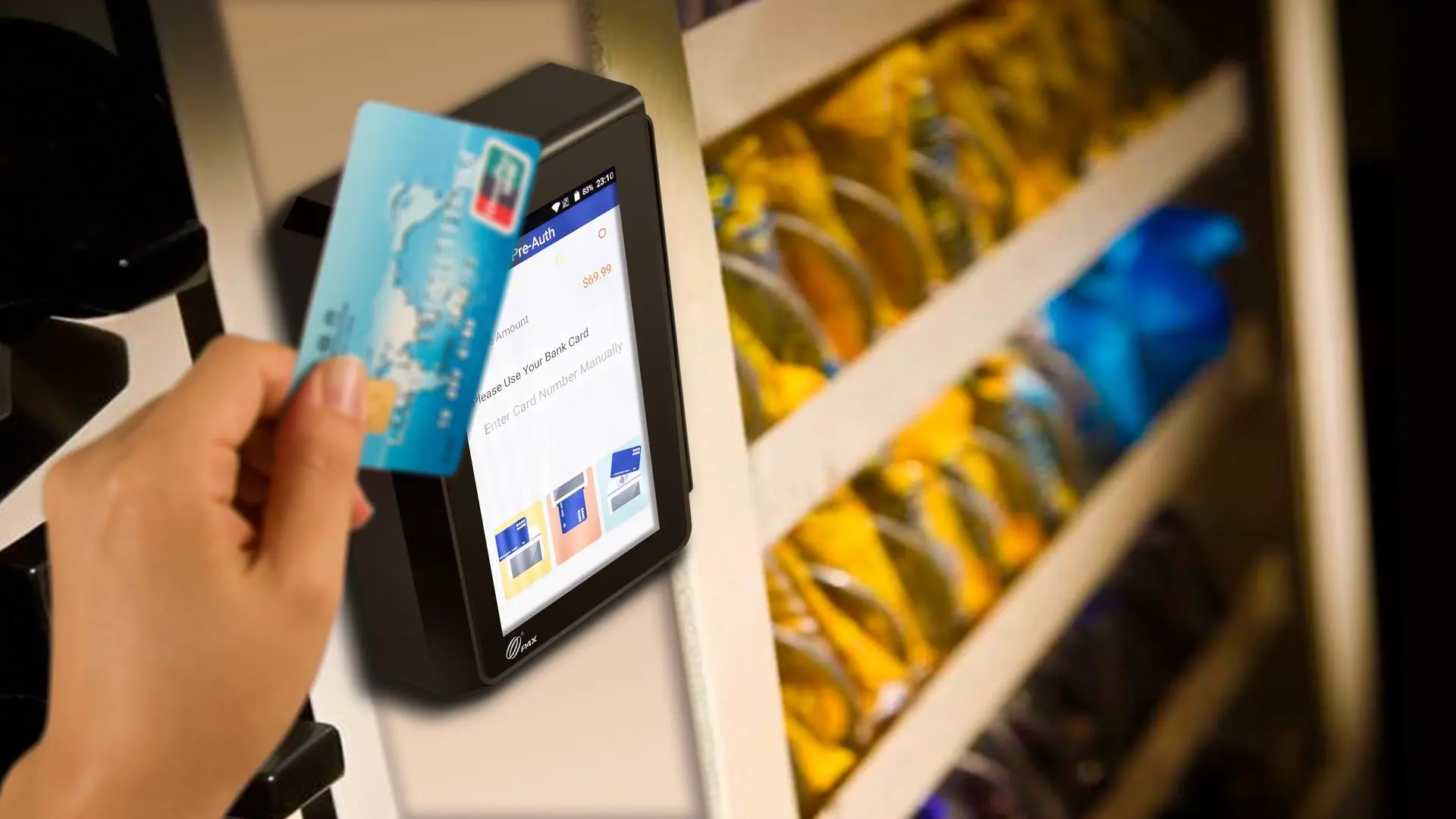
An unattended payment terminal opens up several key opportunities for businesses, supporting both service growth and the optimisation of existing processes:
Expanding service availability
Services can be offered around the clock and in locations where customers use them most frequently, even when no staff are present or when a fully staffed service point would not be economically justified.
Additional revenue streams
Payments can be linked to automated actions such as product dispensing, access control, service activation or booking confirmation. This makes it possible to create services that traditional staffed models cannot support with the same level of efficiency.
Greater flexibility in business processes
Companies can test new service concepts or open points of sale in locations where labour costs would otherwise be too high. Self service makes it possible to experiment with and scale services in a far more flexible way.
Reduced pressure on existing service points
Some transactions can be redirected to self service, helping to reduce queues, speed up service and provide customers with a smoother experience across the entire service journey.
A clear and traceable payment flow
All transactions are processed through certified payment software, creating transparent data on service usage and revenue. This supports better planning and enables decision making based on real time, reliable data.
Business advantages of PAX IM30 in self service environments
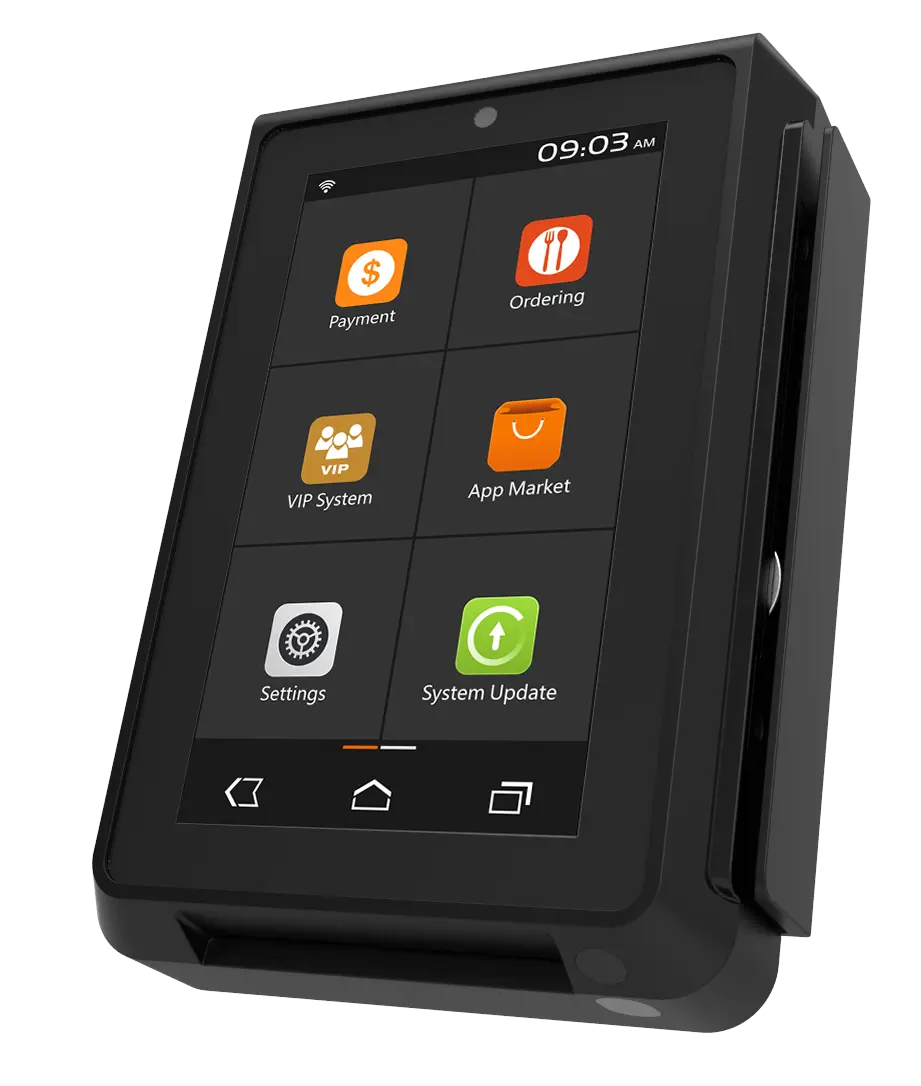
PAX IM30 is designed to turn self service points into a reliable and revenue generating part of a company’s service operation. The terminal combines robust construction, modern usability and versatile payment capabilities, enabling businesses to offer services even in demanding environments while creating new business opportunities.
Reliability in all environments
The IM30 is suitable for both indoor and outdoor use and is designed to withstand high usage volumes. Its impact resistant, water resistant and UV resistant enclosure, together with a wide operating temperature range, makes it suitable for petrol stations, parking facilities and outdoor or industrial unattended machines.
One terminal for all payment scenarios
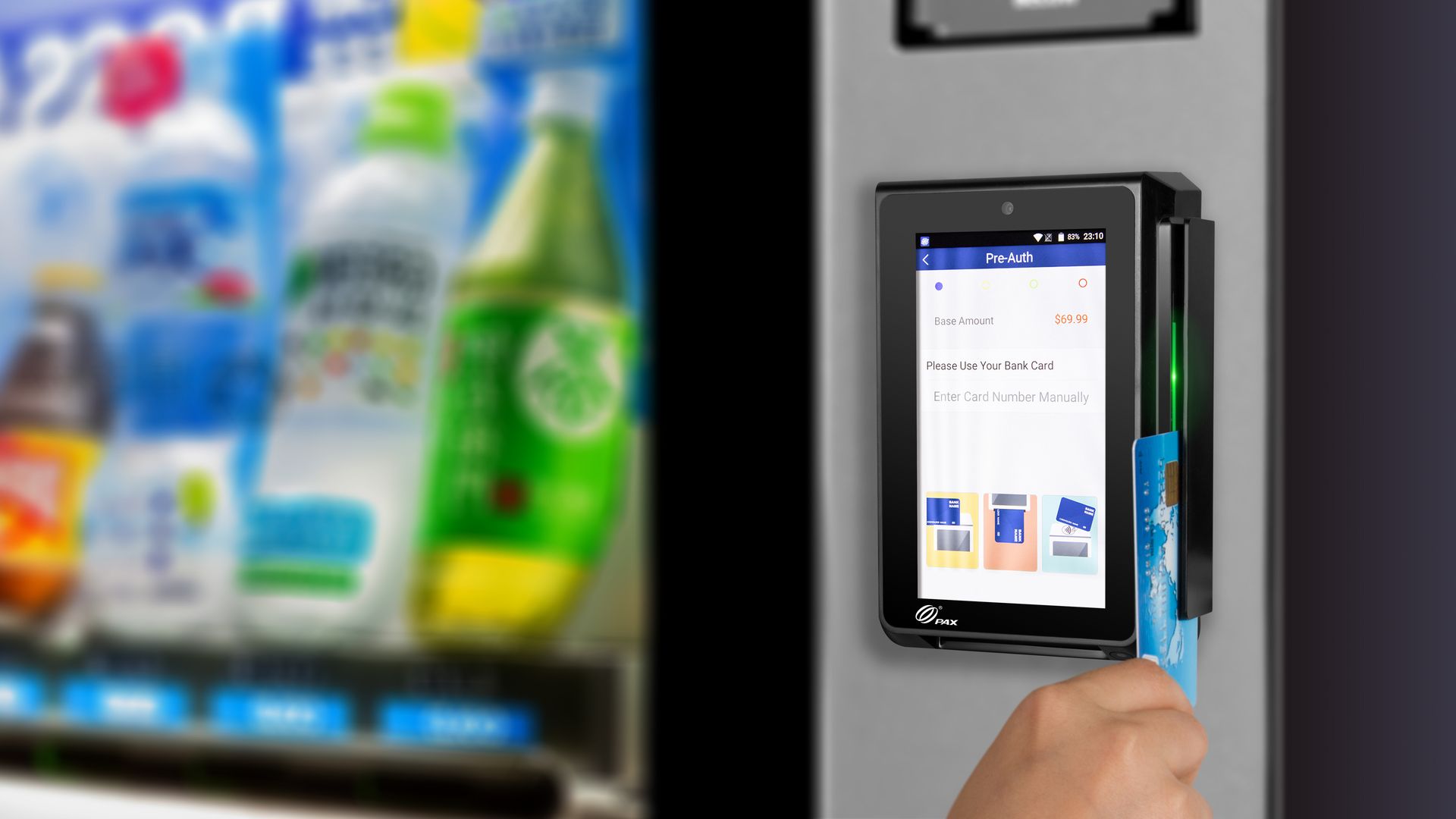
The terminal supports all major payment methods, including chip cards, contactless payments, magnetic stripe cards, QR codes and vouchers. This enables businesses to offer customers a flexible and convenient payment experience regardless of the type of service.
A modern and intuitive user experience
The large high resolution display and smartphone like interaction make unattended use intuitive even for first time users. The proximity sensor automatically wakes the screen when someone approaches, improving visibility while also saving energy.
Visual content and advertising display options
IM30 is not just a payment terminal but also a channel for presenting information and promotional content. The terminal can display instructions, offers, and advertisements, while the HDMI connection allows content to be shown on a larger external screen. This gives businesses additional opportunities to support sales and marketing within unattended service environments.
Fast connectivity and broad integration capabilities
Multiple connectivity options (4G, Ethernet, WiFi, Bluetooth, MDB, RS232, USB) make the device suitable for a wide range of unattended machines and kiosk based solutions. Compliance with EVA standards simplifies installation and shortens deployment time.
The ability to create new services and revenue streams
IM30 can be more than just a payment terminal, as it can be used in services where payment is directly linked to an action or access control. This approach enables companies to design new service models, such as paid access, time based services, booking validation or voucher redemption.
The role of NixPay in the payment process

NixPay is a payment software developed by Nixor that connects the IM30 payment terminal with the company’s backend systems. The software routes transaction data securely and efficiently to the appropriate system, enabling the service-controlling solution to continue the process without delay. NixPay allows payments and services to operate as one seamless, integrated flow.
Secure and reliable payment process
NixPay payment software is integrated with Swedbank and NETS payment acquiring environments in compliance with EMV standards and supports all widely used payment methods, including Apple Pay and Google Pay. Through local partners, payment acquiring is supported in Estonia, Latvia, and Lithuania.
All transactions are based on high security requirements, supported by PCI SLC and SSF certifications. Nixor ensures the security of the card payment software throughout its entire lifecycle, from software governance and development to testing, deployment, updates, and ongoing support.
Payment as part of the service flow
While the payment terminal is the visible part of the solution, the software defines how the terminal operates, which actions it enables, and how these actions are connected to the company’s day to day business processes. NixPay payment software is designed to support business growth by enabling business logic directly at the terminal level, rather than forcing services to adapt to rigid software frameworks.
In unattended environments, this means that the payment is not a standalone transaction, but an integral part of the overall solution. NixPay enables the payment to be directly linked to the next step of the service, such as:
- product or goods dispensing
- access activation
- service start or termination
- booking validation or redemption
The result is a payment solution that goes beyond a traditional point of sale function, supporting seamless service operation and the company’s business logic as a whole.
Reliability and lifecycle management
NixPay is designed to operate reliably even in environments where payment solutions are in constant use and service interruptions are not acceptable. The NixPay payment software supports centralised terminal management, system status monitoring and regular updates, helping to keep the payment process stable and dependable throughout the entire lifecycle of the solution.
The development and operation of NixPay follow secure software lifecycle principles, covering development, testing, updates and ongoing supervision. Compliance with these requirements is confirmed by the PCI SLC certification, ensuring that NixPay meets applicable security and compliance standards over the long term.
Nixor as a partner in building an end to end payment solution
A payment solution is no longer a standalone technical component, but an integral part of a company’s day to day operations, influencing customer experience, data flows and the overall service delivery. For this reason, choosing the right payment partner is essential. A partner who understands the full picture and is able to adapt the solution to the specific needs of the business.
Nixor supports companies with an integrated payment solution that brings together PAX payment terminals, NixPay payment software, and professional support services into a single, cohesive ecosystem. This approach goes beyond selecting the right technology. It provides confidence that the payment solution operates reliably in all situations and remains open to future integrations and collaboration opportunities.
The true value of a payment solution lies not only in the device or the software, but in how these components work together. Nixor has extensive experience in delivering end to end payment solutions as well as enhancing existing systems, ensuring that the payment environment aligns with the company’s service logic and business processes, rather than forcing the business to adapt to the technology. When needed, Nixor can support solution planning, customization and integration, or participate only in the specific stages where support is required.
Nixor’s global technology partner, PAX Technology, provides a hardware foundation that meets the requirements of different markets and regulatory environments, covering a wide range of use cases from unattended service points to complex, highly integrated systems. NixPay software and PAX terminals are designed to work together as a unified solution that is flexible and scalable, allowing the solution to be further developed in the future without the need to replace the entire system.
In addition to technology, continuous support plays a crucial role. Nixor’s team provides technical and operational support throughout the entire lifecycle of the solution, helping ensure reliability, security, and compliance with evolving requirements. This creates a solid foundation for companies to develop unattended services and new revenue models over the long term.
For Nixor, an end to end payment solution represents a long term partnership where the payment infrastructure supports business growth and adapts as requirements evolve. This enables companies to concentrate on their core business, while relying on a payment system that is stable, centrally managed and prepared for future changes.